In today's hyper-competitive digital marketplace, a static product photo simply doesn't cut it anymore. Shoppers want to see, rotate, zoom, and experience a product before they buy. That's exactly where 3D product animation steps in — and the numbers behind it are nothing short of staggering.
Brands that have adopted 3D product animation are reporting sales lifts of up to 80%, higher engagement, fewer returns, and dramatically better conversion rates. Let's break down how and why this technology is transforming the way products are sold online.
What Is 3D Product Animation?
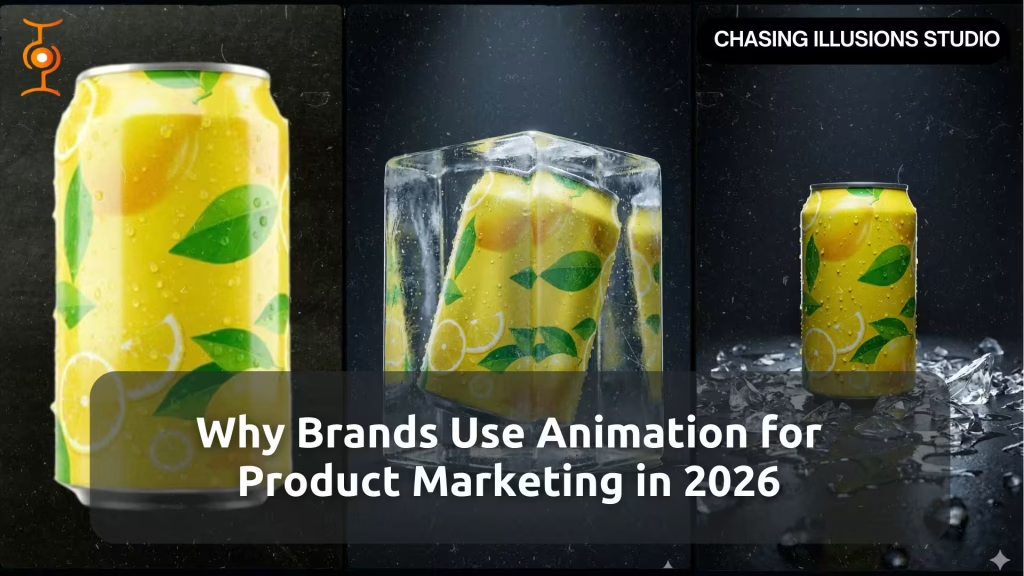
3D product animation is the process of creating lifelike, fully animated digital representations of a product. Unlike traditional photography, which captures a product from a few fixed angles, 3D product animation lets brands simulate movement, demonstrate functionality, highlight internal mechanisms, and enable 360-degree exploration — all within a single digital asset.
From animated product demos for tech gadgets to 3D product visualization for furniture and fashion, this technology is being adopted across virtually every industry.
The Numbers Don't Lie: Key 3D Product Animation Statistics
Before diving into the how, let's look at the hard data driving brands to invest in 3D product rendering and animation:
94% increase in conversion rates — Shopify data confirms that adding 3D product rendering to product pages lifts conversions by an average of 94%.
82% of product page visitors prefer 3D viewing over static images, and 34% actively interact with 3D visuals for more than 30 seconds.
40% higher conversion rates from interactive 3D marketing campaigns compared to traditional methods.
66% higher conversion rate from 3D product configurators versus standard 2D solutions.
35% reduction in product returns — customers who interact with 3D visuals have a far clearer picture of what they're buying.
64% increase in purchase intent triggered by interactive tools like 360-degree product views and AR-enabled 3D animations.
50% increase in click-through rates recorded by a smart gadget brand after adding 3D product animation to their e-store.
The 3D rendering market is projected to reach $5.63 billion by 2025, reflecting the explosive adoption across global industries.
These figures paint a clear picture: 3D product animation doesn't just look impressive — it directly drives revenue.
5 Ways 3D Product Animation Boosts Sales
1. Eliminates Buyer Hesitation with Visual Clarity
One of the biggest reasons shoppers abandon carts is uncertainty. They can't touch or feel the product, so they hesitate. 3D product visualization solves this by replicating the in-store experience digitally. Customers can rotate, zoom, and examine every detail — texture, scale, finish, and function — before clicking "Buy."
A home decor brand that implemented 360-degree product views allowing customers to place items virtually in a room saw a 40% boost in conversions alongside a significant jump in session duration.
2. Animated Product Demos Build Instant Trust
A well-crafted animated product demo does in 30 seconds what a paragraph of copy cannot. It shows the product working. It demonstrates real-world use cases, assembly mechanics, and unique features — all without requiring a live model, physical prototype, or expensive studio shoot.
A furniture vendor that used 3D animation to showcase their products saw return rates drop by 25%, while a software company using 3D animated demos increased lead generation by 35%.
3. Real-Time Customization Drives Emotional Engagement
Modern interactive product animation tools allow shoppers to personalize colors, materials, sizes, and configurations in real time. This level of engagement creates an emotional connection with the product well before purchase. Customers stop being passive observers — they become active co-creators of their purchase experience.
Brands leveraging 3D product configurators report a 66% higher conversion rate versus brands using static 2D images or flat renders.
4. Repurposable Across Every Marketing Channel
One of the most underrated advantages of 3D product design assets is their versatility. A single animation can be repurposed across:
E-commerce product pages
Social media ads (Instagram, TikTok, YouTube)
Email marketing campaigns
Trade show displays
Paid digital advertising
A major retailer that deployed 3D product animation across email campaigns recorded a 30% increase in email click-through rates and a 25% sales boost for products featuring animated visuals — compared to flat imagery.
5. Lower Production Costs, Higher ROI Over Time
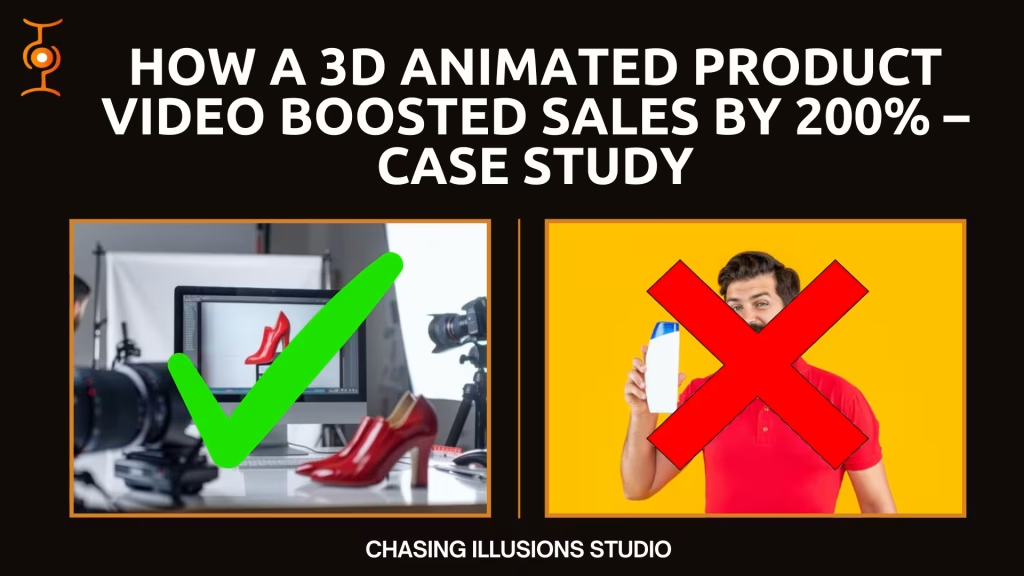
Traditional product photography requires physical prototypes, studios, lighting setups, and multiple costly reshoots for each product variation. 3D product rendering eliminates these overheads entirely. Once a 3D model is built, brands can generate unlimited angles, colorways, and configurations digitally — at a fraction of the cost.
Companies like Riverside Furniture have reported saving up to $100,000 annually by switching to virtual photography and 3D visualization, while simultaneously improving the quality and consistency of their product imagery.
Industries Getting the Most from 3D Product Animation
E-commerce & Retail — Apparel, electronics, home goods, and beauty brands use 3D animation to replicate the in-store experience online.
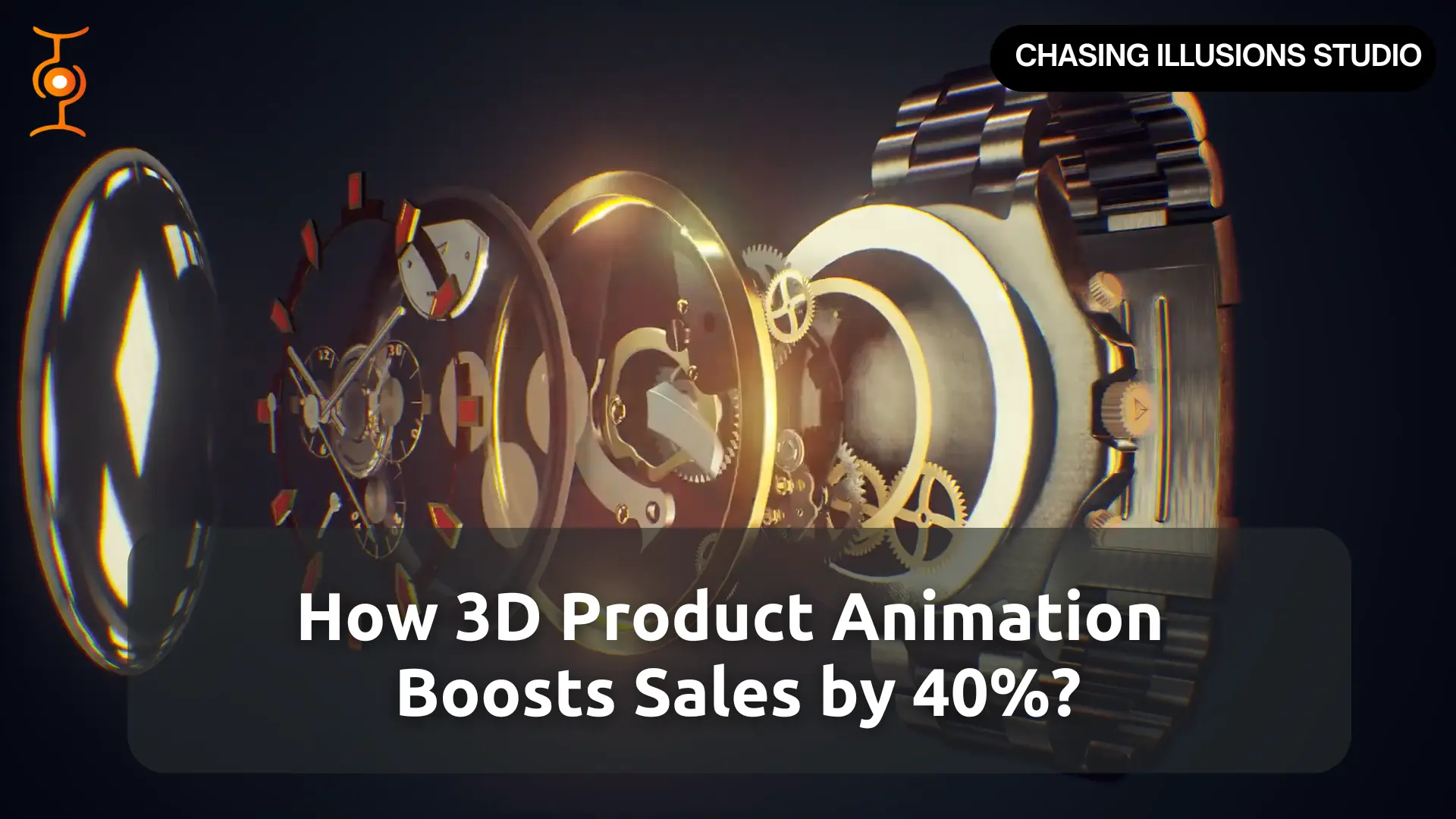
Automotive & Manufacturing — Exploded view animations showcase engineering precision and product quality.
Healthcare & Medical Devices — 3D medical animation helps investors and surgeons visualize complex instruments and procedures.
Tech & SaaS — Software companies use 3D animated explainer videos to demonstrate abstract product features tangibly.
Architecture & Real Estate — Virtual 3D walkthroughs drive pre-sales and investor confidence before a single brick is laid.
Frequently Asked Questions About 3D Product Animation
What is 3D product animation used for?
3D product animation is used to create dynamic, lifelike visual representations of products for marketing, e-commerce, advertising, and sales enablement. It allows brands to showcase product features, demonstrate functionality, enable customization, and provide 360-degree interactive experiences — all without physical prototypes.
How much does 3D product animation cost?
The cost of 3D product animation services varies based on complexity, length, and the studio you hire. Simple animated product demos can start at around $500–$2,000, while high-end photorealistic animations for product launches or TV commercials can range from $5,000 to $50,000+. However, given the ROI data — including conversion lifts of up to 94% — the investment typically pays for itself quickly.
How does 3D product animation increase sales?
3D product animation boosts sales by increasing buyer confidence, reducing return rates, improving conversion rates, and driving higher engagement across digital channels. By allowing customers to interact with a product visually before purchasing, brands reduce friction in the buyer journey and accelerate purchase decisions.
Is 3D animation better than product photography?
For e-commerce and digital marketing, 3D product visualization often outperforms traditional photography. It offers infinite variations, lower long-term costs, higher interactivity, and the ability to showcase products that don't yet physically exist. According to industry data, product pages with 3D visuals generate up to 40% higher conversions than those with standard product photos.
Which industries benefit most from 3D product animation?
E-commerce, retail, automotive, healthcare, architecture, consumer electronics, and tech are among the industries seeing the greatest returns from 3D product animation. Any business that sells a complex, configurable, or visually nuanced product stands to benefit significantly.
What is the difference between 3D product rendering and 3D product animation?
3D product rendering produces static, photorealistic images of a product from a digital model. 3D product animation takes this further by adding motion — showcasing the product rotating, assembling, functioning, or being interacted with. Animation is more dynamic and is particularly effective for demonstrating how a product works.
Final Thoughts: Is 3D Product Animation Worth the Investment?
The data is clear. Brands using 3D product animation are seeing conversion rates climb, return rates fall, and customer engagement soar. With a 94% average conversion lift reported by Shopify, a 66% higher conversion rate from 3D configurators, and documented sales increases across industries, the return on investment is impossible to ignore.
Whether you're launching a new product, scaling your e-commerce presence, or looking for a competitive edge in crowded digital channels, investing in 3D product visualization and animation is no longer optional — it's a strategic necessity.
The brands winning online in 2025 aren't just showing their products. They're letting customers experience them.
CONTACT NOW
Ready to boost your sales with 3D product animation?
Partner with a professional 3D product animation studio to bring your product story to life.
Chasing Illusions Studio
Premium animation & video production studio based in Delhi, India. Specialising in 3D animation, medical visualisation, architectural walkthroughs, and CGI.